Chhatrapati Shivaji Terminus (CST) is an 18-platform train station in Mumbai, India used by three million people every day. The station was built over 10 years and completed in 1887, being named a world heritage site in 2004. Originally named Victoria Station, after Queen Victoria, the station reflected India’s status as a part of the British Empire at the time. CST was designed by British architect F. W. Stevens, combining Victorian Gothic Revival and elements from traditional Indian architecture. Local Indian craftsmen were involved in the creation of many of the building’s intricate decorative details which it is known for today.
CST has an extremely ornate and detailed facade. The main structure is built using local Malad stone, while finer details are made using Porbundar stone, red sandstone and grey basalt common in this area. Carved sections are in yellow Malad stones blended with Italian marble and polished granite. A prominent feature of the Terminus is its central dome, with the highest point of the structure rising to 160 feet. The dome is topped with a statue of a woman holding a torch, symbolizing progress. Ornamental spires, domes, wood detailing and carvings are present throughout, creating a visually complex exterior.
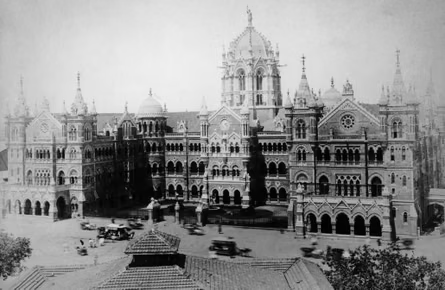
The entrance has two symbolic columns: one with a tiger to represent India, and one with a lion representing the United Kingdom. These highlight Chhatrapati Shivaji Terminus’ dual cultural influences and a monumental expression of colonial-era architectural ambition.
Tokyo Station is the nation’s largest train terminal located in Chiyoda City, Japan. The station is built near the Imperial Palace and many other government agencies to link commerce, the government, and the imperial presence all together. The building is reminiscent of old European architecture with its magnificent red-brick facade, built in 1914 and designed by Tatsuno Kingo within six years of construction. It is a central hub for many trains and metro lines like the JR (Japan Railways) trains, including the Yamanote, Chuo, Sobu, and Keihin-Tohoku lines.
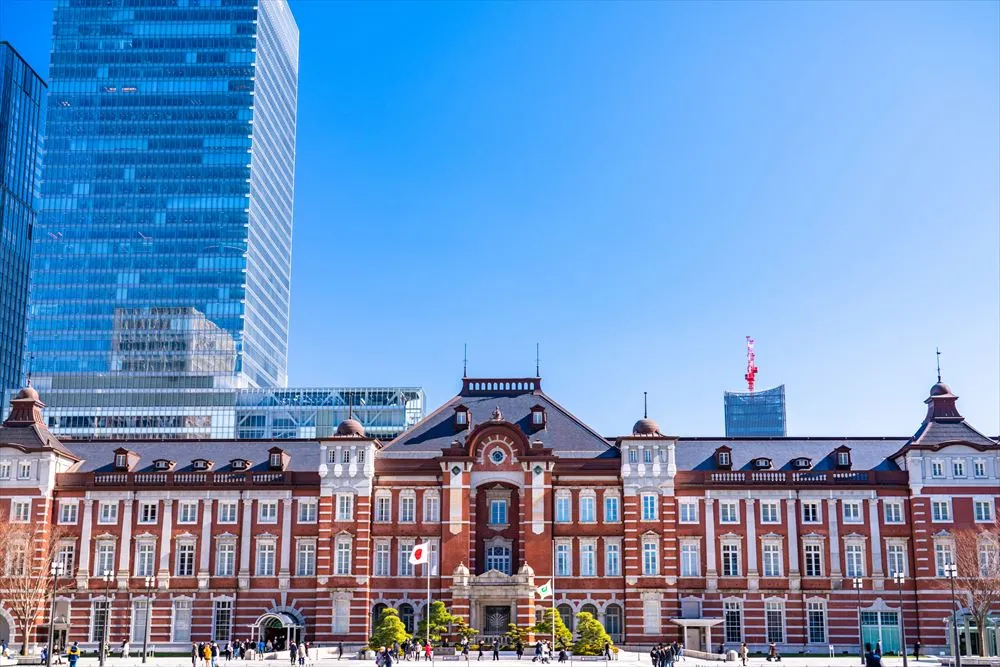
The station’s style is often described as a Queen Anne adaptation, based on the iconic red and white brick design, which was inspired by Amsterdam’s Central Station. The domes located on its north and south ends provide a vertical emphasis, with its grand interior atrium providing a once-in-a-lifetime sight to experience for its arriving passengers. The station’s historicist style combines Western motifs with Japanese structural techniques, therefore illustrating the hybrid nature of early 20th-century Japanese architecture.
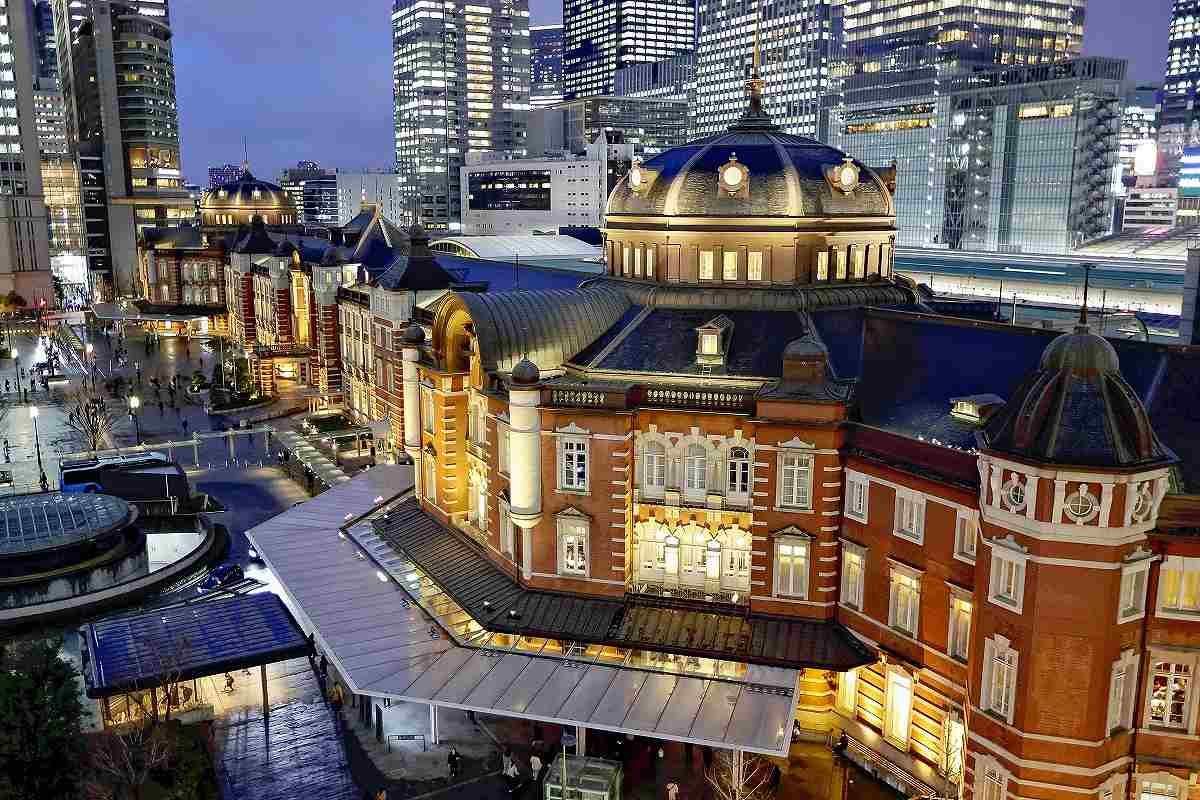
Furthermore, Tokyo Station is presented as the paradigmatic case of historicist importation through its use of railways. The station symbolizes nation-building and the modernity of the state through its rail infrastructure, with its trains connecting formerly disaggregated regions to form a unitary national infrastructure. In short, railways act as signifiers of a modern nation in Japan, linking technology, mobility, and state power all together.
Unfortunately, not long after the station opened in 1914, it was struck by the Great Kanto Earthquake in 1923, only nine years after its opening. Following that, in 1945, both north and south domed roofs along with most of the third floor were severely damaged due to World War II. Luckily, just two years after the war ended, the domed roofs were reconstructed. During the 1964 Tokyo Olympics, the grand departure ceremony of Japan’s first Shinkansen bullet train began at Tokyo Station. Later in 2003, the building was recognized not only as Tokyo’s central rail station, but also as an Important Cultural Property through withstanding these many years of difficulty. Lastly, in 2012, the long-term preservation and restoration plan finally came to an end.
Style, significance, and imperial power
The Chhatrapati Shivaji Terminus and Tokyo Station are both examples of transit hubs with hybrid cultural architecture that work to emphasize imperial power. The main differences between Chhatrapati Shivaji Terminus and Tokyo Station appear both in style and significance. As mentioned above, the architecture of CST emphasizes opulence and decorative elements while that of Tokyo Station emphasizes sleek design, signifying Japan’s rising modernity.
CST “recalls all at once a palace, a political capitol, a grand hotel, and a cathedral.” Its grand towers, domes, and gargoyles are expressive of British coloniality and influence. Similarly, Tokyo Station’s use of European architecture signifies Japan’s desire to keep pace with the West. One article notes, “The first design for Tokyo Station…was too ‘Japanese’ and was therefore rejected.” Thus, the station adopted a broadly European style with minute Japanese motifs. Its streamlined design emphasizes productivity amidst the domination of global capitalism. As the station stands post-World War II, it was refined architecturally into a symbol of Japan’s “pragmatic, subdued, and efficient” qualities. An upcoming contender to the European West, Japan wanted to assert itself as a strong and connected nation-state.
This differs from CST’s symbolism of grandeur and imperial opulence. The British chose to blend Gothic Revival with Indo-Saracenic styles because of its association with “divine authority—ideal symbolism for colonial occupation.” The inclusion of the Indo-Saracenic style allowed for aspects of local architecture, such as Chaitya arches, to shine through. Additionally, CST asserts domination through imposing verticality, whereas Tokyo Station stays relatively low-rise, supposedly in deference to the Imperial Palace.
Railways were seen as “the backbone of a unified nation.” Thus, the success of Japan as a dominating imperial nation seemed to depend on its overall connectivity: connectivity from across the nation to the imperial capital of Tokyo. Similarly, CST was pivotal in building up British colonial power in India post-Mughal rule. It worked as the central base of the Great Indian Peninsular Railroad, connecting Mumbai, a central trading hub, to the rest of the region. Atop CST’s main building stands “a fourteen-foot tall allegorical figure of Progress.” Whereas Tokyo Station symbolizes Japan’s self-directed strive for modernity and progress, CST is reminiscent of the British justification for colonization—of ushering in “civilization” and advancement.