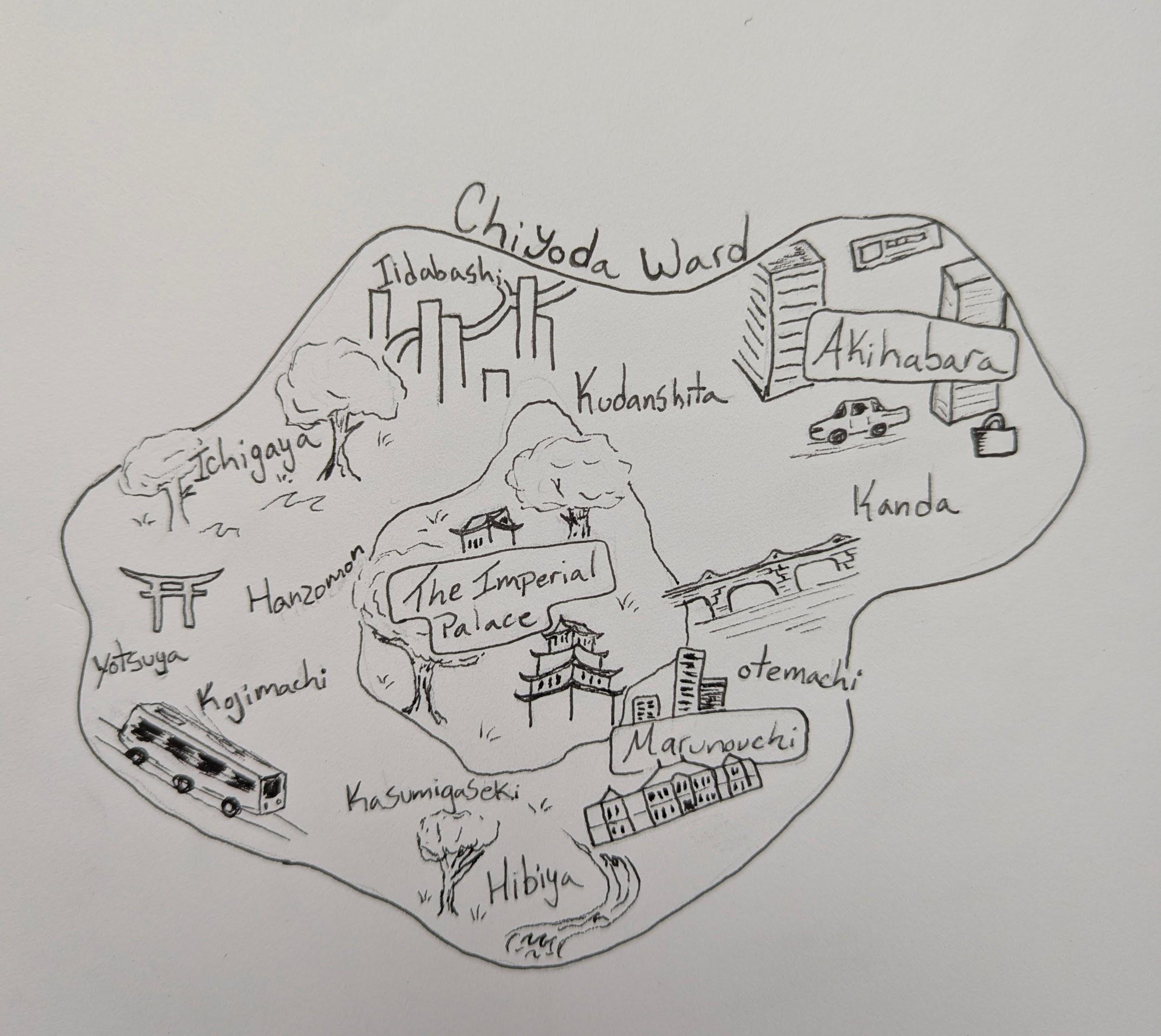
Chiyoda Ward is an area in Tokyo that includes and surrounds the Imperial Palace, a rebuilt structure erected in place of the old Edo castle after fires tore through in the 19th century. Currently, the Imperial Palace is a major tourist attraction. The primary palace grounds are typically closed to the public, and the Fukiage Palace is the emperor of Japan’s official residence. Within Chiyoda Ward there are multiple sections, including major shopping and tourism areas in Akihabara to the north, the primary business and finance district Marunouchi in the southeast, as well as multiple residential and historical neighborhoods surrounding the palace.
The Imperial Palace is easily Chiyoda Ward’s most unique element. This is where Edo and modern Tokyo grew from. Edo Castle was originally built in the 15th century, making the castle grounds have a rich and longstanding history. Edo Castle was designed with elaborate moats, walls and defenses, as well as separated wards within. Outside of the castle grounds, the city grew organically, still evident from the winding road in nearby neighborhoods. The natural rivers through the plains in the area allowed for moats and canals to be made and used, where markets and neighborhoods prospered.
Since the 19th century, there have been major changes to Chiyoda Ward. In the 1850s, American general Matthew Perry arrived in Japan with battleships and demanded Japan be open for visitors. This led to civil wars between those who wanted Japan to stay isolated and those who wanted it open to foreigners. Eventually in the 1860s, the shogun Yoshinobu Tokugawa relinquished power to Emperor Meiji. In 1868, Edo was renamed Tokyo and became the new capital of Japan, ushering in the Meiji Restoration period. Later, a massive earthquake hit Tokyo in 1923, destroying 400,000 buildings and killing many. The subsequent rebuild led to a major modernization of Tokyo.
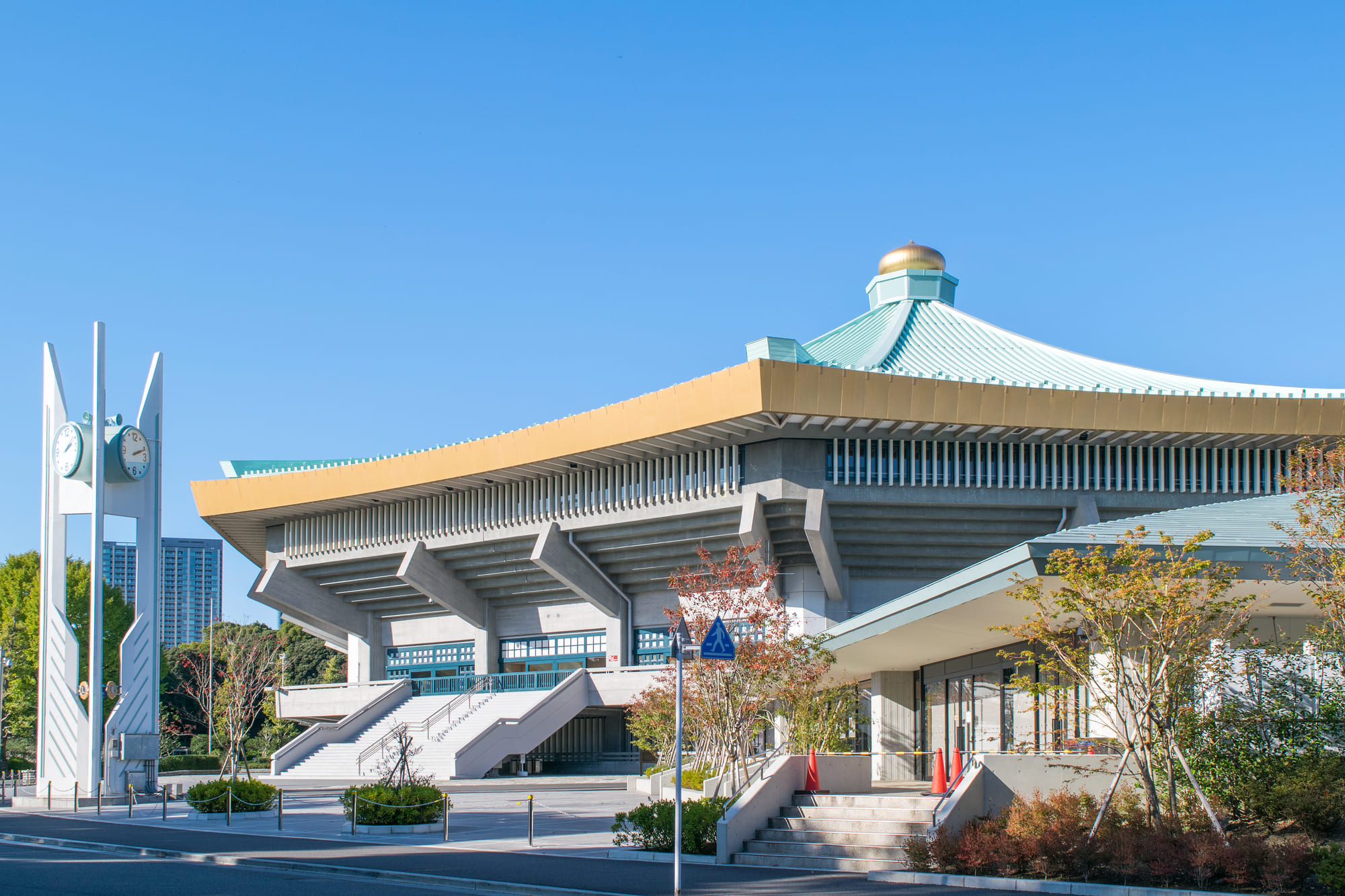
Three structures in Chiyoda Ward
Three major building structures found in Chiyoda Ward are the Imperial Palace, the Edo Castle ruins, and the Nippon Budokan. The Imperial Palace is historically the Edo Castle and later transformed into the modern Imperial Palace with a parkland enclosed by fortified walls. This structure uses water as an urban framework; the moat surrounding the Imperial Palace illustrates how water is defined as a defensive strategy around its structures and later as an aesthetic identity. The palace was constructed in the late 16th century with a massive timber keep atop its stone foundations, being visible from across the city. Its destruction consisted of lightning-induced fire in 1657, which led to the loss of the timber superstructure; however, the stone walls and the moat survived the natural tragedy. Later, Tokugawa shifted from military display to administrative centrality instead, leading to the Meiji Restoration in 1868, the relocation of the capital city, and repurposing the site as the Imperial Palace. Today, its surviving elements are the stone walls, the moat, and a raised gate tower displaying precise masonry.
Secondly, the Edo Castle ruins are what has remained and preserved structures of the former shogunal palace which once dominated Edo, modern-day Tokyo. Edo Castle began its construction in 1593 and was completed by the year 1636, a fortified site surrounded by substantial moats and multiple gates. To this day, the ruins showcase the castle’s thick defensive walls, layered moats, and remnants of residential quarters, providing its viewers with a tangible glimpse of what used to be Edo’s past.
Lastly, Nippon Budokan, which was built in Kitanomaru Park, is an arena in Chiyoda Ward. It was constructed in 1964 to serve as the central organization for Japanese Budo and the Olympics. Along with that, the structure also functions as a concert arena, additionally hosting cultural events from time to time as well.
The palace at the center of the city
One significant landmark in Chiyoda Ward is the Imperial Palace. It sits in the middle of Tokyo and acts as a sort of island-like respite from the chaos of the rest of the city. Flush with greenery, the structures within Chiyoda Ward juxtapose the concrete urban environment that surrounds it, likening it to a “beating heart.” Moats and parks separate the palace structure from high-rise apartments and office buildings that decorate the surrounding Marunouchi financial district. Roads radiating around the park draw the eye, allowing the palace and its gardens to not only sit at the center of the city, but be a centerpiece.
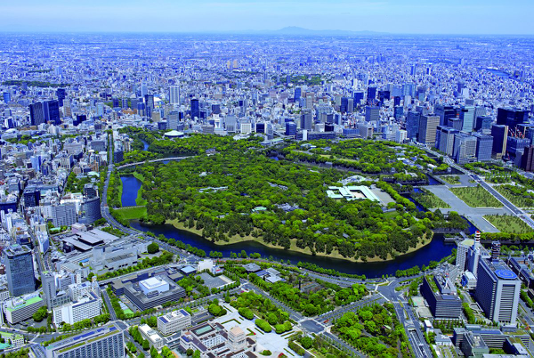
As Maya Chawla from Architectural Digest notes, Japanese architecture “has always been rooted in simplicity, harmony, and a close connection to nature.” The Imperial Palace clearly exemplifies this. The structure is low-rise, allowing it to harmonize with the surrounding natural environment. As shown by the bird’s-eye view of the city, the palace is hardly discernible from the trees that surround it. Rather than dominating the city through verticality or grandeur as other imperial homes do—the opulence of the Forbidden City in Beijing and Palace of Versailles in France come to mind—the Tokyo Imperial Palace dominates by asserting deference from neighboring structures.
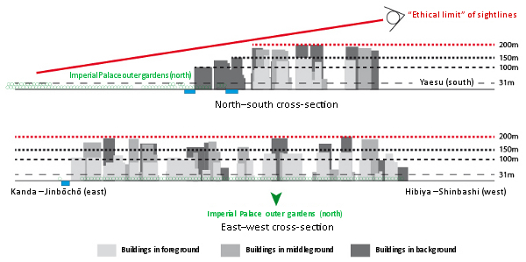
Raphaël Languillon-Aussel notes that the Marunouchi skyline forms a gradient where building heights decrease moving towards the Imperial Palace. Aussel continues that this is out of convention: “Long considered a living god, the Emperor was invisible and untouchable…the city is ‘prostrating’ itself in a sort of reverential bow.” Thus, the Imperial Palace and its gardens demand respect from the rest of the city based on the legacy, imperial power, and symbol of the Emperor represented by the palace. Chiyoda Ward serves as a center for relaxation, a passive portrayal of power among the teeming streets of Tokyo.