1. Pre-industrial Citymaking: Vancouver Art Gallery Lawn
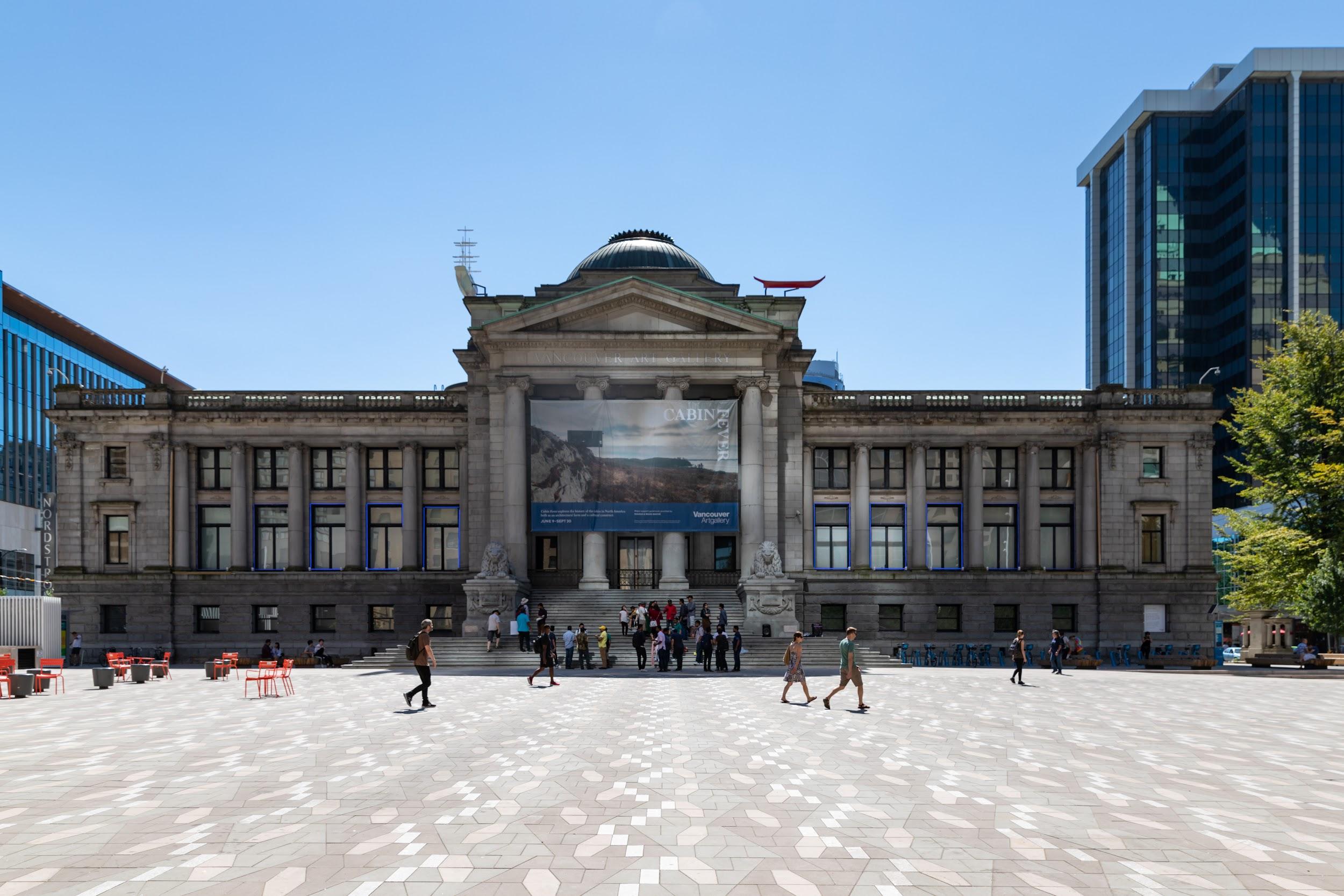
For the pre-industrial citymaking example, I have chosen the lawn of the Vancouver Art Gallery. This is related to pre-industrial ideas of creating a public realm, alongside political and cultural hearths within cities, specifically in reference to the Greek agora and Roman amphitheaters. In early Greek citymaking, agoras were the central public square of cities, being gathering areas and commercial and social hubs. Amphitheaters were important venues for cultural and political events. These “hearts” were important because they allowed strangers to begin to comfortably coexist in one place, often the goal of creating a public realm.
In Richard Sennett’s reading about the public realm, he emphasized creating open systems: neighborhoods should have porous borders and spaces should not be overly defined. He also argues that public realms should encourage spontaneous interaction between strangers, without citizens having to lose their individuality in the process. In other words, creating places where people can come and go, passively gathering information on others without having to have a permanent role in social interaction.
The lawn of the Vancouver Art Gallery has become a gathering space for people to debate politics, protest local issues, and is one of the cultural hearts of Vancouver as a large art institute, successfully exemplifying Sennett’s ideas of the public realm. Greek agoras were similarly areas of debate and social interaction, though they emphasized commercial activity as well. Amphitheaters in Roman cities were very important for spreading Roman culture and encouraging social interaction as well as political engagement. This showed up in the use of political gatherings and cultural battles as entertainment. Thus, the VAG is a good representation of pre-industrial citymaking.
2. Industrial Citymaking: Stanley Park
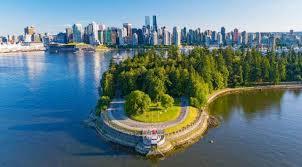
Stanley Park is a good example of industrial citymaking because it relates to movements like the Parks and City Beautiful Movements that encouraged the beautification of cities. Both these movements were focused on reforming cities from industrial hubs that induced squalor into aesthetic places. The City Beautiful Movement was focused on giving people a purpose to live in these cities. It emphasized beautification and civic planning to endorse socioeconomic equality alongside livability. The Parks Movement was specifically focused on the integration of green space into cities in order to encourage wellness in the wake of industrial pollution and sickness.
Stanley Park is a really prevalent example of a public park located in the city. Though it is at the edge of Vancouver, it portrays the idea of integrating parks into cities. It contributes aesthetic beauty to Vancouver while also encouraging health improvement through its nature spaces and bike paths. People participate in many recreational activities in the park that encourage movement and health. Additionally, the park, like any green space, helps remove air pollution and carbon dioxide in the air.
During the industrial era, city makers were focused on finding ways to make the city more comfortable and enjoyable. Industrialization had resulted in overcrowding, class division, and pollution. Parks such as Stanley Park encourage all of this through being publicly accessible, good for the environment, and healthy. Additionally, it contributes natural beauty, an aesthetic quality that was integral at the time. Thus, Stanley Park is a good example of industrial citymaking.
3. Post-Industrial Citymaking: Southeast False Creek
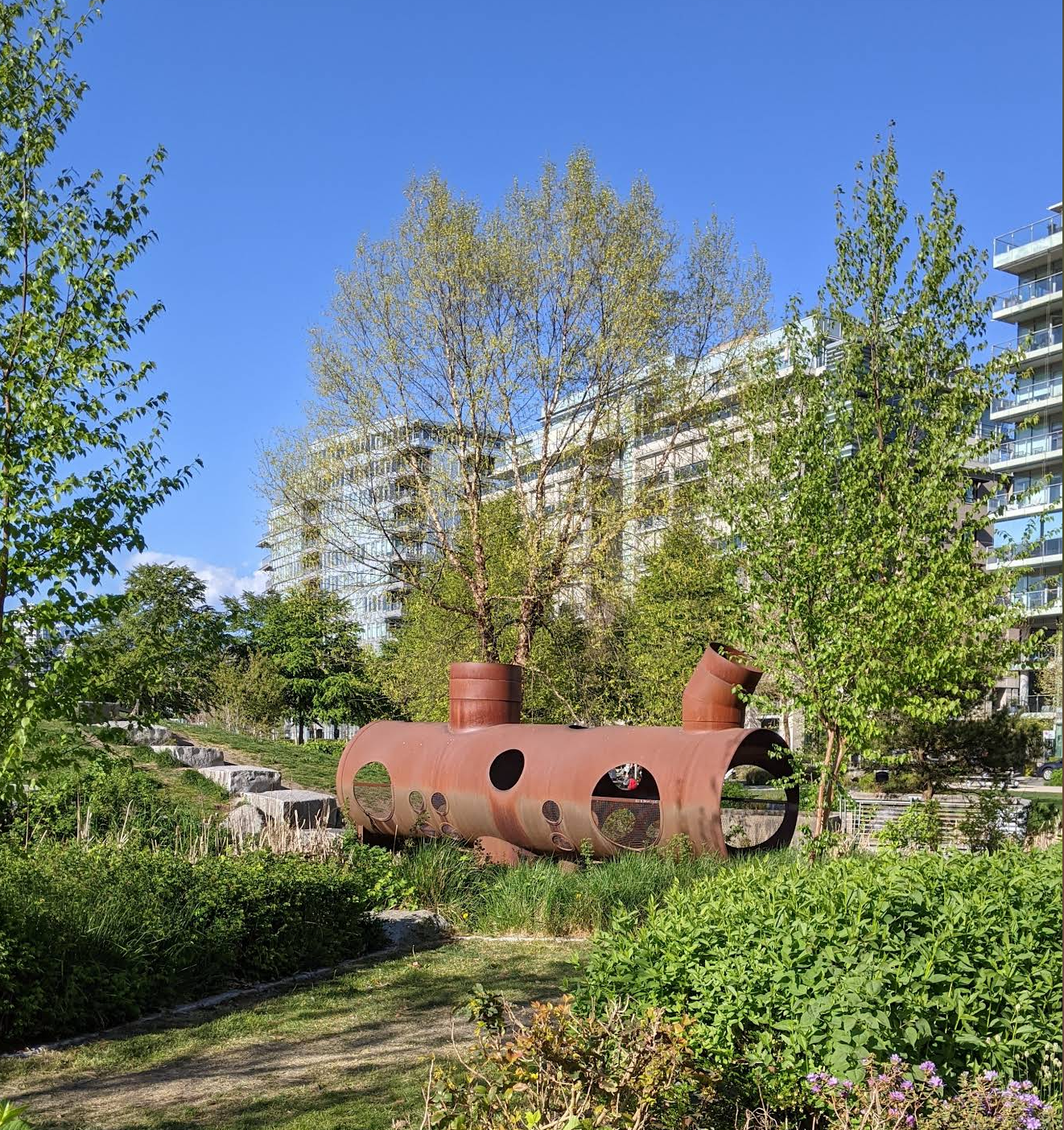
Southeast False Creek is an example of post-industrial citymaking because it shows how the city had moved away from industry and towards new innovation and natural and cultural beautification. SEFC used to be the heart of industrial activity in Vancouver, but is now seen as a very livable and upcoming neighborhood with a lot of sustainable and green features such as Hinge Park, pictured above. The picture portrays how citymakers have attempted to preserve the industrial heritage of the area, as shown by the pipe bridge within the park. The park itself is a naturalized wetland which is helpful to manage stormwater and protect ecosystems.
In Richard Florida’s ideas of the Creative Class, he argues that cities can find economic growth by attracting high-skilled workers through creating innovative, culturally relevant, livable cities. While industrial-era cities were focused on finding growth through attracting factories which would then attract workers, Florida’s theory argues that now, cities can attract the “Creative Class” and tech, innovation, and corporations will follow. Redesigning neighborhoods to attract the Creative Class often involves infrastructure interventions to aid the creation of start-ups and research centers as well as driving green and digital infrastructure. Additionally, these districts emphasize integrating culture, natural recreation areas, and technology into the cityscape.
False Creek exemplifies efforts to convert from industrial areas to innovation districts through trying to attract high-skilled workers by increasing the quality of life and diversity of the area. Additionally, the implementation of green spaces portrays an emphasis on sustainability and recreation. The model of SEFC as being mixed-income and encouraging social equity allows for diversity in the area, and the multitude of mixed-use buildings with retail establishments further contributes to cultural generativity. Areas around False Creek are already major hubs of technology and commerce. It is important to note that efforts of urban renewal as outlined in Richard Florida’s theory can cause gentrification. This has historically been displayed through the displacement of working-class people after the industrial era in False Creek, though the neighborhood is working to encourage equity. Thus, SEFC is a good example of post-industrial citymaking.